

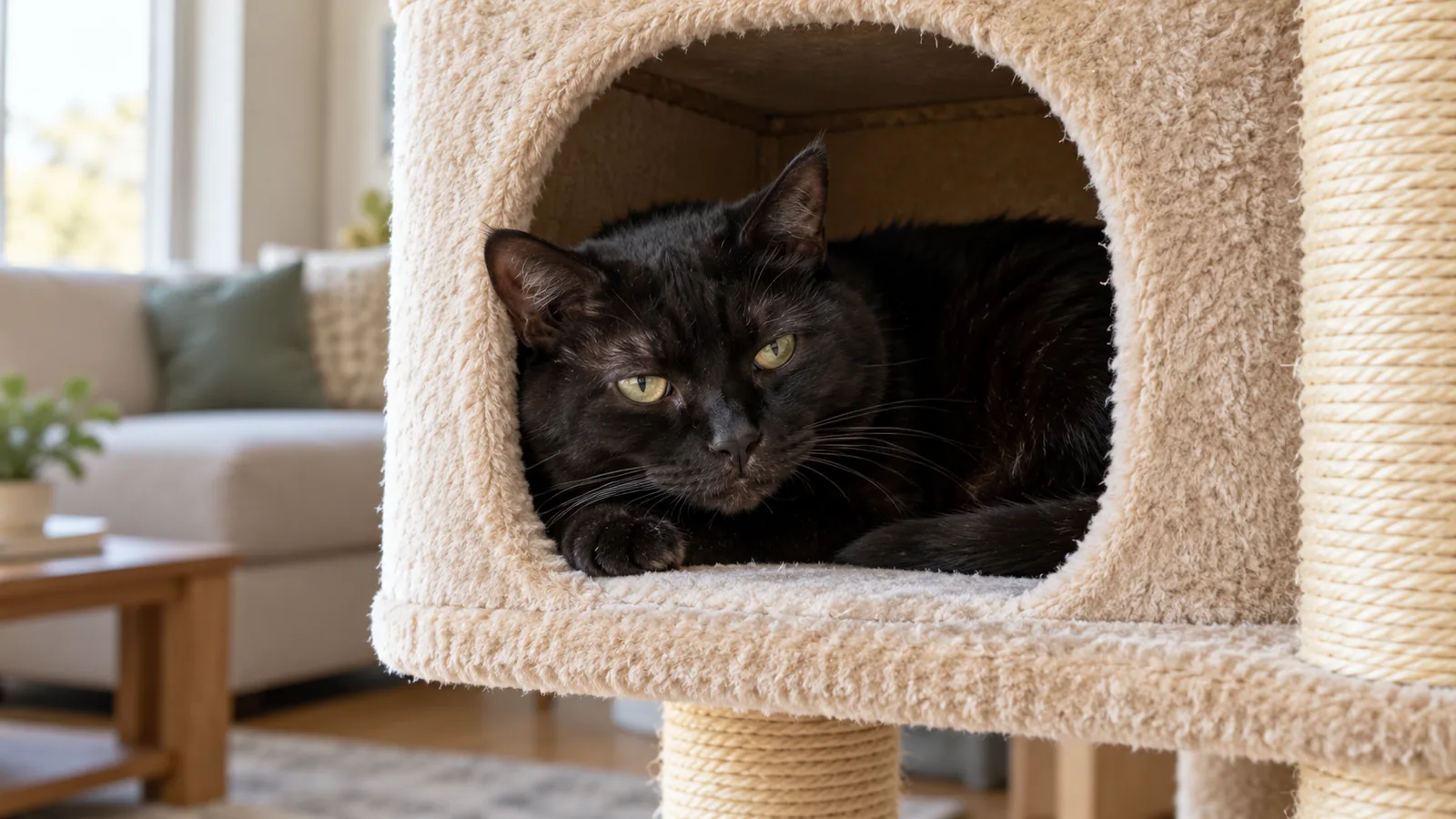
Aging should bring more naps in the sunshine, not new anxiety, grumpiness, hiding, confusion, or forgotten housetraining. Those changes are rarely "normal," and in senior dogs and cats they usually trace back to a medical problem. Pain is the most common culprit, and conditions like hypothyroidism, kidney disease, liver disease, diabetes, and Cushing's syndrome can all masquerade as ordinary aging. So can some cancers, whose earliest sign may be nothing louder than a pet who quits doing what they love. Dogs and cats hide discomfort well, so by the time a change is obvious, the cause has usually been building for weeks.
At Central Kentucky Veterinary Center in Georgetown, our AAHA-accredited hospital and in-house lab can check organ function and hormone levels, then follow up with X-rays, ultrasound, and CT imaging to find the cause of the changes you see. November is both National Senior Pet Month and Pet Cancer Awareness Month, making it a fitting time to have your aging pet evaluated for the lumps, weight changes, and quiet withdrawals that families are tempted to explain away. Our preventative health care visits are personalized around your pet's age and breed. If your older dog or cat has not seemed like themselves lately, give us a call to schedule an appointment and let's find out why.
Start Here: The Senior Behavior Basics
- Most lasting behavior changes in older dogs and cats have a medical cause, and pain leads the list, so a veterinary exam is the right first move.
- Growling, hiding, house-soiling, night pacing, or a shift in appetite, thirst, or weight deserves senior bloodwork, not a wait-and-see shrug.
- Cognitive dysfunction syndrome is real, but it's a diagnosis of exclusion, so pain, thyroid trouble, kidney disease, and failing senses get ruled out first.
- Treating the underlying condition often restores the behavior you've been missing, which is why acting within days or weeks beats waiting months.
Which Behavior Changes in a Senior Dog or Cat Should You Take Seriously?
Take seriously any change that lasts more than a few days and departs from your pet's normal: new irritability or snapping, withdrawal from the family, accidents from a previously reliable pet, restless or vocal nights, appetite or thirst shifts, weight change, confusion, or a pet who no longer wants to be touched.
You're the world's leading expert on your pet's normal, which makes you the most important part of good senior pet care. We can measure what's happening inside your pet; only you can tell us what’s happening at home, and your observations have a real effect on the tests we recommend.
Here's how the changes we hear about most often map to their likely causes:
| Behavior change | Common medical causes |
| Snapping or flinching when touched | Arthritis, dental pain, or a painful mass |
| Pacing, crying, or restlessness at night | Cognitive dysfunction, hyperthyroidism in cats, pain |
| House-soiling in a reliable pet | Kidney disease, diabetes, bladder stones or infection, arthritis, cognitive decline |
| Confusion, staring into space | Cognitive dysfunction, liver disease, brain disease, vision loss |
| Hiding or withdrawing | Pain, fading vision or hearing, systemic illness |
| Ravenous appetite | Hyperthyroidism in cats, diabetes, Cushing's syndrome |
| Sleeping more, lethargy | Pain, endocrine diseases, cognitive decline, infections |
Why Is Pain the Most Common Reason an Older Pet Acts Differently?
Pain drives more behavior change in senior pets than any other single cause. It’s not always an obvious limp or yelp; it often looks like grumpiness, sleeping on the floor instead of climbing on the couch, a cat who quits jumping to the windowsill, or a pet who'd rather be left alone. Arthritis and dental disease top the list of painful conditions in older pets.
Arthritis: Sore Joints, Short Tempers
Osteoarthritis affects more senior dogs and cats than almost anyone suspects, and behavior usually changes well before a limp appears. The two species tell on themselves differently:
| How dogs tend to show joint pain | How cats tend to show joint pain |
| Irritability when handled or bumped | Grooming less, so the coat looks greasy or unkempt |
| Refusing stairs, the car, or the couch | Avoiding counters and other favorite high spots |
| Stiffness after rest that eases with movement | Missing the litter box because climbing in hurts |
| Quitting walks early | Pulling back from petting and play |
Dental Pain: Easy to Miss, Hard to Live With
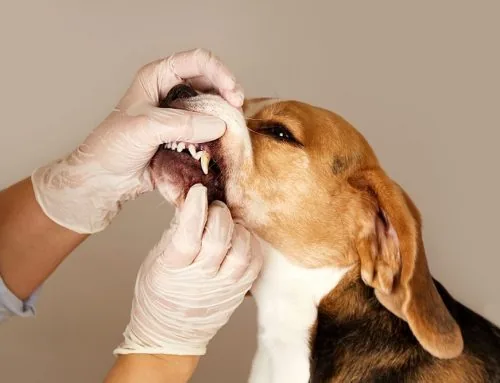
A sore mouth changes behavior long before it stops a pet from eating. Watch for flinching when touched near the face, kibble abandoned in favor of soft food, chew toys suddenly ignored, new withdrawal, or a snap that seems to come from nowhere. Periodontal disease builds over months to years, so by the time breath turns foul or a tooth loosens, the mouth has usually hurt for a long while. Many families tell us their pet acts years younger once painful teeth are treated, which is why a careful look inside the mouth is part of every senior exam we do.
Could It Be Cognitive Dysfunction Syndrome Instead of Ordinary Aging?
Cognitive dysfunction syndrome, the veterinary equivalent of dementia, is common in dogs and cats past age ten, and it follows a recognizable pattern rather than a vague slowing down. Days and nights flip, familiar rooms turn confusing, and a pet who always came when called begins to stare past you instead.
The signs we hear about most:
- Restless nights: pacing, vocalizing, or wandering while the house sleeps, then dozing the day away
- Getting stuck: standing in corners, staring at walls, or waiting at the hinge side of the door
- Lost habits: accidents in the house despite years of reliability
- Blank moments: failing to recognize familiar people or pets, or ignoring cues they've known forever
- Aimless wandering: drifting from room to room without apparent purpose
Cognitive dysfunction syndrome is a diagnosis of exclusion, so we rule out the imitators first: kidney disease, liver disease, thyroid trouble, pain, a brain tumor, and fading vision or hearing. Each can produce a nearly identical picture. When CDS is the answer, diet changes, supplements, environmental enrichment, and sometimes prescription medication can slow the progression, all of them working better started early than late.
Can Cancer Show Up First as a Behavior Change?
Cancer in a senior pet can start as a behavior change rather than a lump: a dog who retires from the daily ball game, a cat who walks away from a favorite meal, hiding or sleeping more, and even confusion.
Signs worth a prompt visit include:
- A new or changing lump: regardless of size, shape, or location, a new lump deserves a look
- Weight drifting down: especially when appetite seems normal or bigger than ever
- Meals left unfinished: a formerly devoted eater now walks away from the bowl
- Stamina loss: cutting play sessions or walks short, or opting out entirely
- Confusion or personality change: staring into space, irritability, or clinginess
None of these proves cancer, and many turn out to be something far simpler. When an exam turns up a lump, cytology (a look at its cells under the microscope) helps tell us what we're dealing with, and when we need to know exactly where a mass sits, CT imaging draws us that map. Cancers found early leave far more options on the table than cancers found late.
Which Common Senior Conditions Change a Pet's Mood and Temperament?
Several common senior diseases act directly on mood and temperament, so new irritability, aggression, or anxiety is often the first sign a family notices, usually well before the classic physical signs appear. The encouraging part is that most of these show up on routine senior lab work.
Thyroid Disease Runs in Two Opposite Directions
Feline hyperthyroidism turns every dial up. Affected cats yowl at night, pace the house, grow short-tempered or even aggressive, and eat ravenously while the scale keeps dropping. A single blood test diagnoses it, and once treatment takes hold, the midnight opera usually quiets along with the physical signs.
Dogs run the opposite direction. An underactive thyroid, or hypothyroidism, slows everything down with lethargy, weight gain, and a dull coat, but it also has a behavioral side families rarely connect to a hormone: new fearfulness, anxiety, and uncharacteristic aggression or irritability that reads as a personality change. Since a simple thyroid panel confirms it and treatment is straightforward, an aging dog who has turned unexpectedly grumpy or reactive deserves a thyroid check before the change is written off as temperament.
Brain Disease and Tumors
When a senior pet develops aggression, confusion, or a personality shift that bloodwork can't explain, disease inside the brain itself moves up the list. A brain tumor can announce itself through behavior long before anything more obvious appears: sudden aggression, disorientation, staring, circling, house-soiling, or a pet who seems lost in a familiar room. Seizures, a head tilt, or new stumbling alongside a behavior change raise the concern further. These signs overlap heavily with cognitive dysfunction, which is exactly why an unexplained shift warrants a thorough workup, and when we need to see the brain itself, advanced imaging like CT provides the picture a physical exam cannot.
Endocrine and Organ Diseases
Several organ diseases change behavior by slowly changing how a pet feels:
- Chronic kidney disease lets waste build up in the bloodstream, and a pet who feels low-grade nausea all day becomes picky and withdrawn, along with more urination resulting in house-soiling surprises.
- Liver disease creates a similar dullness and poor appetite, and when it advances, toxins a healthy liver would clear reach the brain and cause confusion, disorientation, aimless pacing, and in severe cases seizures.
- Cushing's syndrome floods the body with cortisol, bringing panting, an inability to settle, a bottomless water bowl, and less stamina.
- Diabetes paints a thirsty, hungry, accident-prone picture while weight slips away.
High Blood Pressure
High blood pressure often rides along with kidney disease, thyroid problems, heart disease, or diabetes, and it changes behavior in ways that are easy to miss until they turn dramatic. Rising pressure can leave a pet disoriented, restless, and agitated, and its most sudden sign is frightening: bleeding or retinal detachment inside the eye can cause abrupt blindness, sometimes overnight. A pet who suddenly bumps into furniture or has widely dilated pupils needs to be seen right away, because pressure caught and controlled early can sometimes save or restore vision that would otherwise be lost for good.
Why Does House-Soiling in a Reliable Senior Pet Deserve a Workup?
House-soiling in a pet who was reliable for years is rarely a training lapse or spite; it is one of the most common ways a medical problem first shows itself, and the causes are varied enough that guessing wastes time a workup would save.
Several categories are worth ruling out:
- Urinary tract disease: infections, bladder stones, and even bladder tumors cause urgency, straining, and accidents, and they show up on a urinalysis and imaging rather than an exam alone.
- Endocrine and organ disease: diabetes, kidney disease, and Cushing's syndrome all make a pet drink and urinate far more, so the bladder fills faster than old habits can keep up with.
- Pain and mobility: arthritis or spinal and intervertebral disc disease can make the trip to the box or the yard hurt enough that a pet stops making it in time, especially with stairs in the way, or cause nerve dysfunction that prevents normal bladder and bowel function.
- Cognitive decline: a pet with cognitive dysfunction may simply forget the routine or lose track of where the door is.
Because the causes range from a simple infection to disc disease to cognitive change, the first step is always the same: a urinalysis and senior bloodwork to sort out which one is driving the accidents before assuming it's "just age."
How Do Fading Eyes and Ears Change a Senior Pet's Behavior?
Sensory loss rewrites behavior in ways that are easy to mistake for a bad attitude. A dog who startles hard when touched from behind may be losing hearing, not patience. A cat who hesitates on the stairs after dark, clings in unfamiliar places, or stops answering to a long-known name may be navigating a dimmer, quieter world.
Gradual vision loss usually gives a pet time to adapt by memory, and most do remarkably well. Sudden vision loss is a different matter entirely. A pet who abruptly starts bumping into furniture, freezes on familiar stairs, or develops wide, unresponsive pupils needs to be seen the same day, not at the next available appointment. Sudden blindness can signal high blood pressure, retinal detachment, glaucoma, or other conditions where fast treatment sometimes preserves the vision that remains, and where the underlying cause may be dangerous in its own right. When it comes on quickly, treat it as an emergency and reach us right away.
Frequently Asked Questions About Senior Pet Behavior
How often should a senior dog or cat see the veterinarian?
Every six months is the right rhythm for most seniors. Pets age several human-equivalent years between annual visits, and kidney, thyroid, and blood sugar problems can develop meaningfully in that window.
What should I bring to an appointment about a behavior change?
Videos and notes beat memory every time. A twenty-second phone clip of the night pacing, the stiff rise from bed, or the hesitation at the stairs shows us things your pet will hide in the exam room. Add notes on when it started, what changed, and any shifts in eating, drinking, or litter habits.
Will my pet's behavior return to normal once the cause is treated?
Many pets come back to themselves once the underlying problem is managed, and the change can be striking when pain or thyroid disease was the driver. Some conditions, like cognitive dysfunction, are managed rather than cured, but earlier support generally means a slower decline and more good days.
Helping Your Senior Pet Act Like Themselves Again
A behavior change is a message, and senior dogs and cats send it the only way they can. When something shifts, trust your instinct instead of blaming their age. If your older dog or cat has started dodging touch, hiding, or pacing the hall at 2 a.m., reach out to our team at Central Kentucky Veterinary Center in Georgetown and we'll work out the why together.



Leave A Comment